Ethnography
Ethnographic Study for Madras Kaapi
Through observations, diary studies, and workshops, this ethnographic research explored Toronto’s café culture to help Madras Kaapi design meaningful experiences.
Year :
2025
Industry :
Food
Client :
Madras Kaapi
Project Duration :
14 weeks
Introduction:
Madras Kaapi, a well-known South Asian coffee chain, is planning to open its first cafe in Toronto as part of its North American expansion. To succeed in a new market, the brand needed to understand how people in Toronto actually use cafes - not just for coffee, but as a “third place” between home and work.
Our project focused on exploring Toronto’s cafe culture through observations, diary studies, and workshops. We wanted to learn how locals include cafes in their routines, what they enjoy most about their favorite spots, and what they look for beyond the usual Starbucks experience. These insights would help Madras Kaapi design a cafe that feels relevant, welcoming and meaningful for Toronto customers.
Challenges:
Doing research across multiple methods (observations, diaries, workshop) in a short time frame.
Recruiting participants who regularly visited cafes and could reflect deeply on their experiences.
Synthesizing a large volume of qualitative data (observational notes, diary entries, workshop ideas) into clear themes.
Designing a workshop that was short but effective in surfacing trade-offs and priorities.
Results:
Collected 15 observation sessions, 16 diary entries, and ran a workshop with 26 participants.
Captured real quotes, behaviours, and frustrations from everyday café users.
Identified the non-negotiables for Toronto cafe-goers: great product quality, fast and clear ordering, and friendly service.
Delivered a client-facing report with prioritized recommendations, guiding Madras Kaapi’s North American launch.
Research Methods
Research Methods
01.
Observation
Observation
15 sessions across multiple Toronto cafes - non-participant and participant observation during peak hours.
02.
Affinity Mapping
Affinity Mapping
Clustered observational notes into themes that shaped the diary study design.
03.
Diary Study
Diary Study
6 participants logged photo-supported entries: facts, feelings, and reflections about each café visit.
04.
Workshop
Workshop
26 participants. Short, focused, designed to surface trade-offs and real priorities not just surface preferences.
05.
Client Report
Client Report
Prioritized recommendations guiding Madras Kaapi's launch strategy.
PROCESS:
Observational Research → Affinity Mapping → Report:
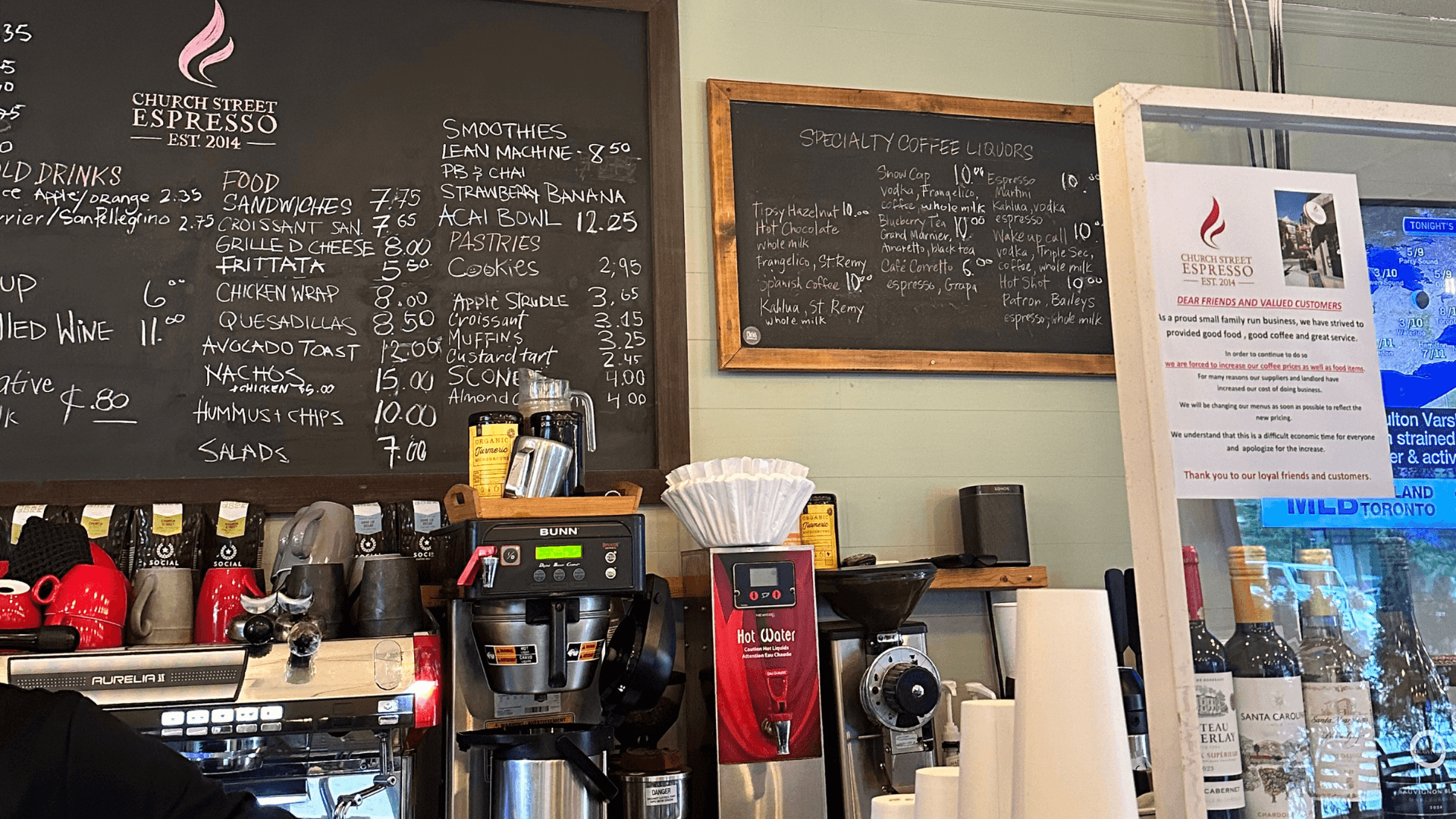
We conducted observations across multiple cafes in Toronto to capture how people engage with cafés in real life. Our approach included both:
Non-participant observation → Watching customer flow, seating choices, and service times without interfering.
Participant observation → Noticing particular participants while they were ordering, sitting, and engaging with the ambience.
All participants were recruited with consent forms and took part in the study willingly. This dual perspective gave us a well-rounded understanding of how cafes function during peak hours and how customers interact with both the physical space and the staff.
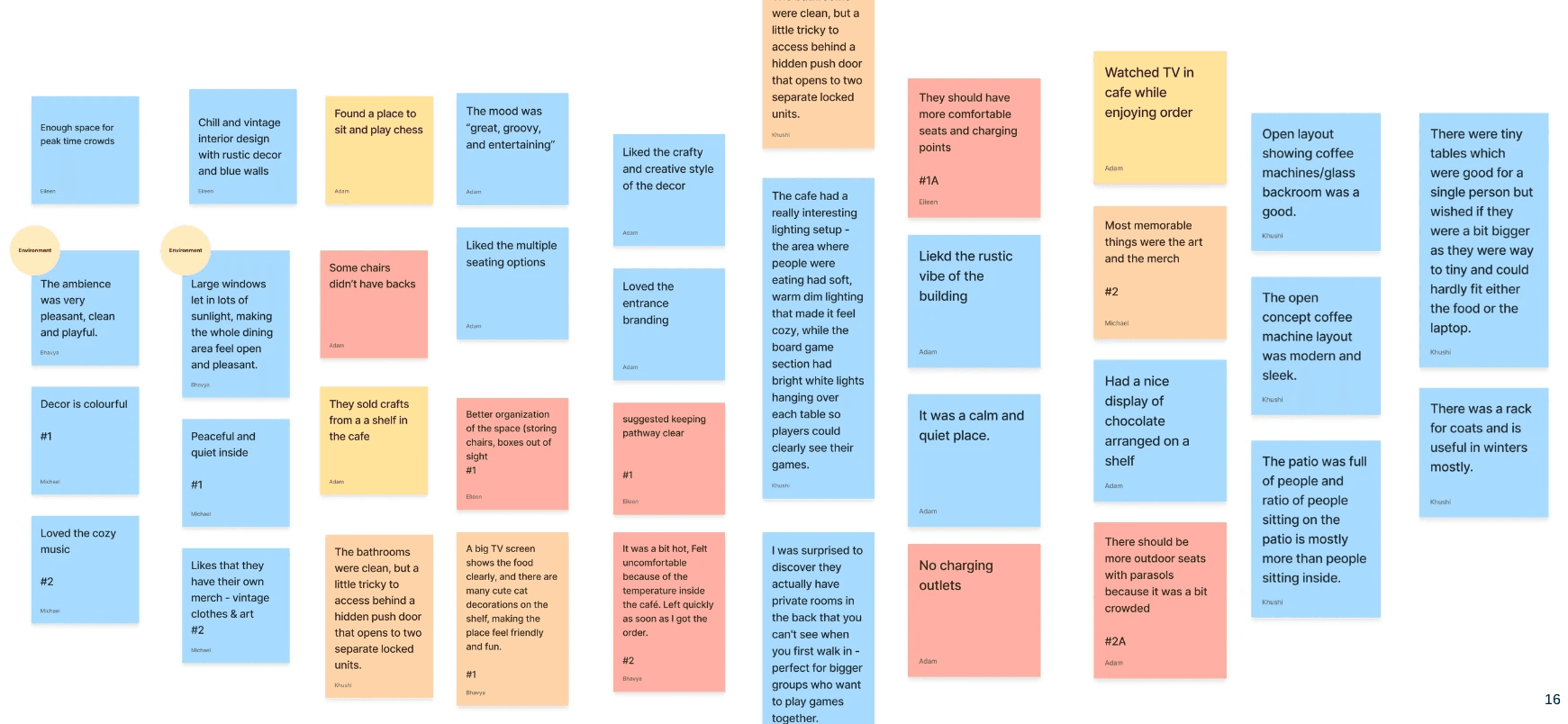
Using affinity mapping, we clustered our notes into different themes. These findings were documented in an initial report, which guided the next stage of research.
Checkout the observational research report here » https://www.canva.com/design/DAG0jc1vQPk/k7_fb2mopjRmqvV4C_Te1w/edit?utm_content=DAG0jc1vQPk&utm_campaign=designshare&utm_medium=link2&utm_source=sharebutton
Diary Study (Design → Execution → Affinity Mapping → Report):
Next, we designed a diary study where 6 participants recorded photo-supported entries about their cafe visits. Each diary entry included facts (orders, duration), feelings (mood, frustrations), and reflections (reasons for cafe choice).
After execution, we applied affinity mapping again to identify recurring habits and emotional drivers. This produced a second report, which helped us capture private, routine cafe behaviors that observations alone couldn’t reveal.
Workshop → Final Report:
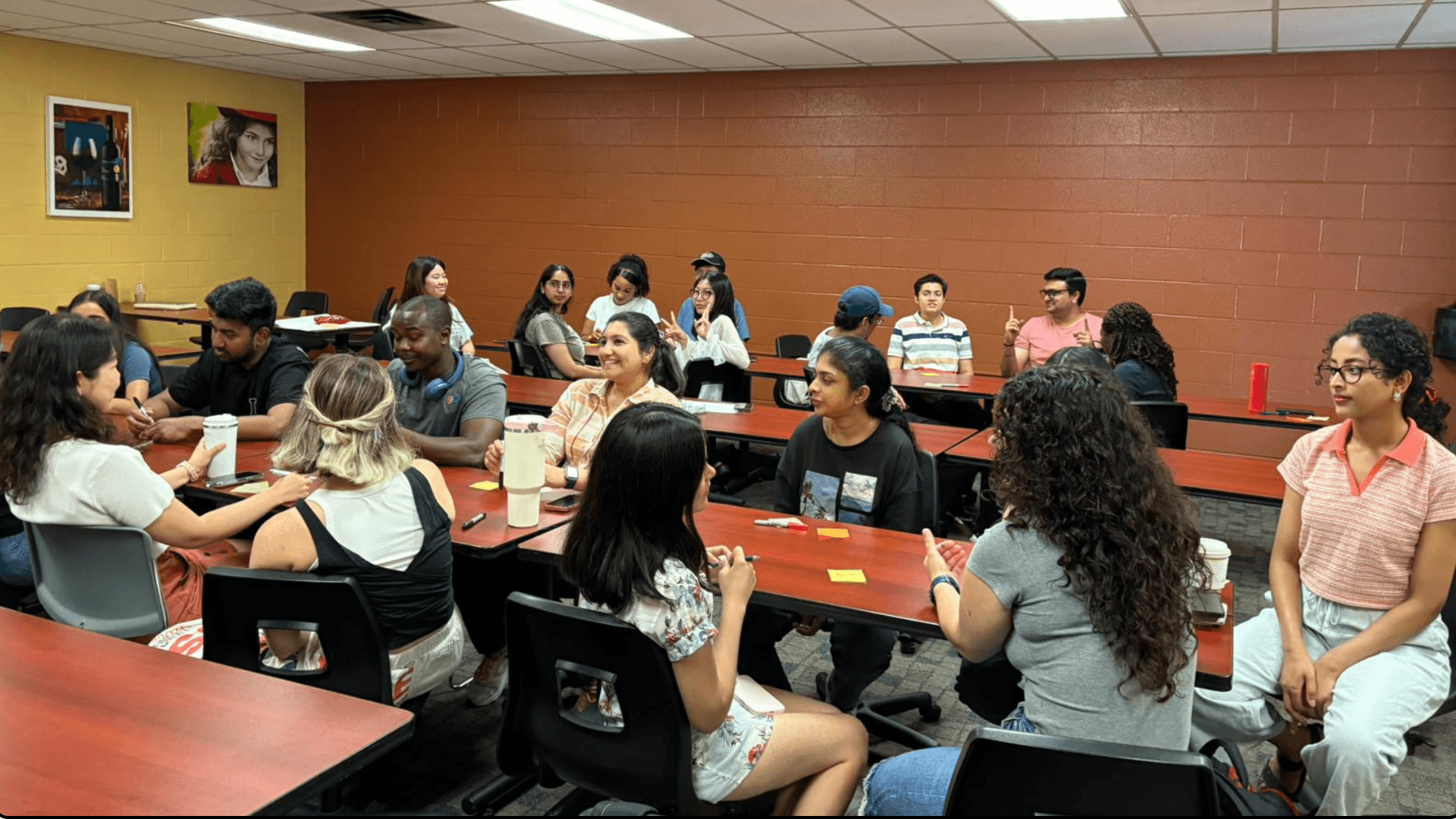
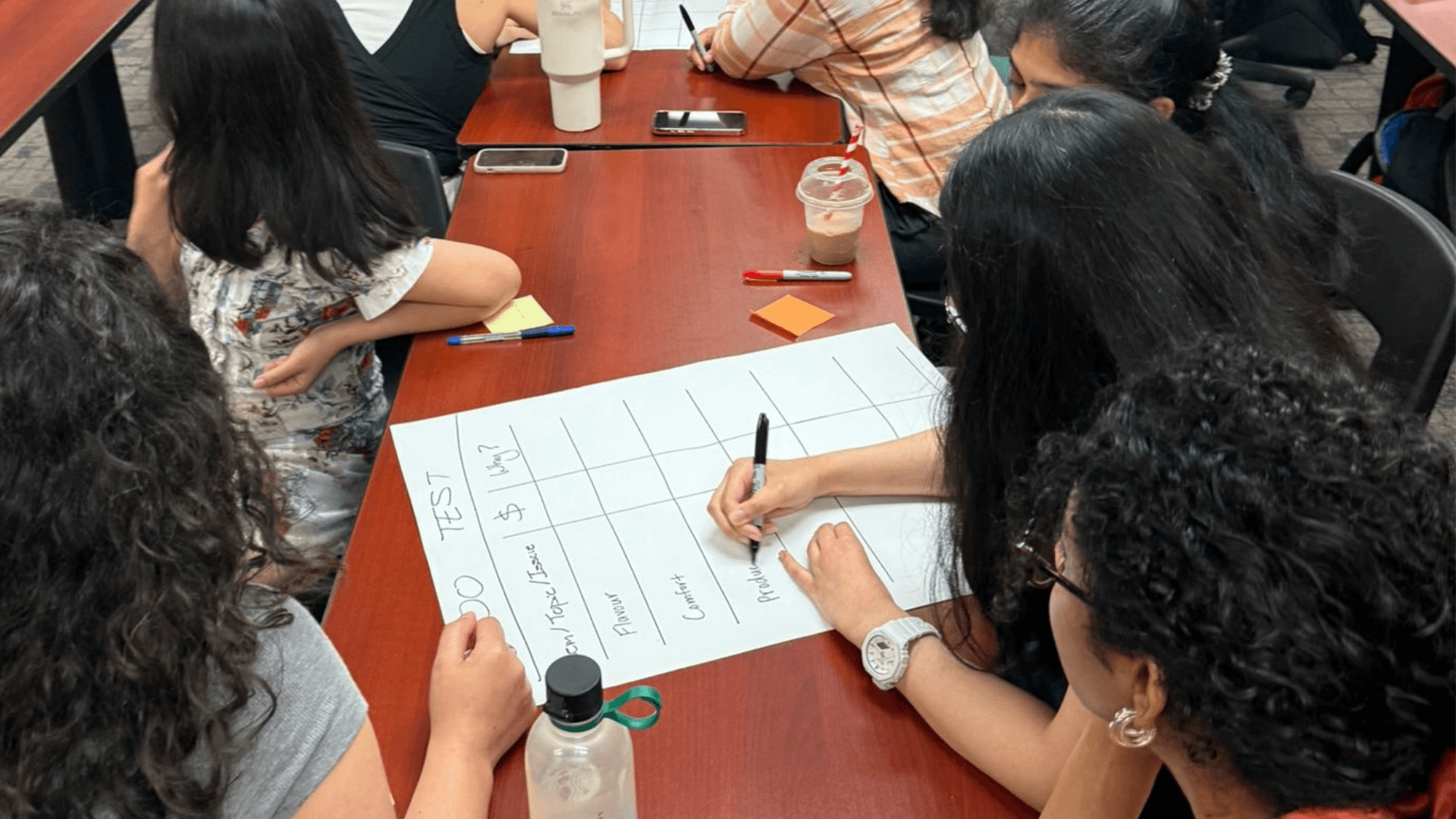
We then designed and facilitated a co-creation workshop with 26 participants. Activities like Post-Up, 1-2-4-All, the $100 Test and Speedboat helped us capture both frustrations and aspirations, what participants valued most and what barriers held them back.
The final report synthesized findings from all three methods (observations, diaries and workshop) but placed emphasis on the workshop outcomes since they directly reflected customer priorities. This client-facing deliverable highlighted key themes, quotes and actionable recommendations for Madras Kaapi’s Toronto launch.
key findings:
Product quality is non-negotiable. People return only if drinks and food are consistently good.
Menu clarity matters. Visual menus and clear pricing reduce confusion and speed up orders.
Wait time and flow are critical. Customers expect ordering to take less than 90 seconds.
Cafes are social and functional. People use them to work, study, and meet friends, so seating variety is essential.
Friendly staff create loyalty. Service interactions strongly affect repeat visits.
Digital tools are expected. QR codes, mobile ordering, and reliable Wi-Fi are seen as basics, not extras.
recommendations:
Add visual menus and signage for clarity.
Train staff for recipe consistency and overlap shifts to reduce peak wait times.
Create flexible seating zones: cozy corners for individuals, communal tables for groups.
Introduce signature drinks/pastries as brand differentiators.
Pilot digital pre-ordering to manage queues and serve busy customers faster.

Conclusion:
This project gave me hands-on experience with ethnographic methods and showed me the power of combining observation, diaries, and workshops. It reinforced that while ambience matters, customers won’t compromise on product quality and service basics. The study equipped Madras Kaapi with clear, evidence-backed recommendations for entering the Toronto market confidently.
What I’d Do Differently:
Spend more time on longitudinal diaries to capture seasonal or weekly patterns.
Involve staff perspectives directly, since they shape the service experience as much as customers.
Run a longer workshop with time for prototyping, not just idea generation.
Ethnography
Ethnographic Study for Madras Kaapi
Through observations, diary studies, and workshops, this ethnographic research explored Toronto’s café culture to help Madras Kaapi design meaningful experiences.
Year :
2025
Industry :
Food
Client :
Madras Kaapi
Project Duration :
14 weeks
Introduction:
Madras Kaapi, a well-known South Asian coffee chain, is planning to open its first cafe in Toronto as part of its North American expansion. To succeed in a new market, the brand needed to understand how people in Toronto actually use cafes - not just for coffee, but as a “third place” between home and work.
Our project focused on exploring Toronto’s cafe culture through observations, diary studies, and workshops. We wanted to learn how locals include cafes in their routines, what they enjoy most about their favorite spots, and what they look for beyond the usual Starbucks experience. These insights would help Madras Kaapi design a cafe that feels relevant, welcoming and meaningful for Toronto customers.
Challenges:
Doing research across multiple methods (observations, diaries, workshop) in a short time frame.
Recruiting participants who regularly visited cafes and could reflect deeply on their experiences.
Synthesizing a large volume of qualitative data (observational notes, diary entries, workshop ideas) into clear themes.
Designing a workshop that was short but effective in surfacing trade-offs and priorities.
Results:
Collected 15 observation sessions, 16 diary entries, and ran a workshop with 26 participants.
Captured real quotes, behaviours, and frustrations from everyday café users.
Identified the non-negotiables for Toronto cafe-goers: great product quality, fast and clear ordering, and friendly service.
Delivered a client-facing report with prioritized recommendations, guiding Madras Kaapi’s North American launch.
Research Methods
Research Methods
01.
Observation
Observation
15 sessions across multiple Toronto cafes - non-participant and participant observation during peak hours.
02.
Affinity Mapping
Affinity Mapping
Clustered observational notes into themes that shaped the diary study design.
03.
Diary Study
Diary Study
6 participants logged photo-supported entries: facts, feelings, and reflections about each café visit.
04.
Workshop
Workshop
26 participants. Short, focused, designed to surface trade-offs and real priorities not just surface preferences.
05.
Client Report
Client Report
Prioritized recommendations guiding Madras Kaapi's launch strategy.
PROCESS:
Observational Research → Affinity Mapping → Report:
We conducted observations across multiple cafes in Toronto to capture how people engage with cafés in real life. Our approach included both:
Non-participant observation → Watching customer flow, seating choices, and service times without interfering.
Participant observation → Noticing particular participants while they were ordering, sitting, and engaging with the ambience.
All participants were recruited with consent forms and took part in the study willingly. This dual perspective gave us a well-rounded understanding of how cafes function during peak hours and how customers interact with both the physical space and the staff.
Using affinity mapping, we clustered our notes into different themes. These findings were documented in an initial report, which guided the next stage of research.
Checkout the observational research report here » https://www.canva.com/design/DAG0jc1vQPk/k7_fb2mopjRmqvV4C_Te1w/edit?utm_content=DAG0jc1vQPk&utm_campaign=designshare&utm_medium=link2&utm_source=sharebutton
Diary Study (Design → Execution → Affinity Mapping → Report):
Next, we designed a diary study where 6 participants recorded photo-supported entries about their cafe visits. Each diary entry included facts (orders, duration), feelings (mood, frustrations), and reflections (reasons for cafe choice).
After execution, we applied affinity mapping again to identify recurring habits and emotional drivers. This produced a second report, which helped us capture private, routine cafe behaviors that observations alone couldn’t reveal.
Workshop → Final Report:
We then designed and facilitated a co-creation workshop with 26 participants. Activities like Post-Up, 1-2-4-All, the $100 Test and Speedboat helped us capture both frustrations and aspirations, what participants valued most and what barriers held them back.
The final report synthesized findings from all three methods (observations, diaries and workshop) but placed emphasis on the workshop outcomes since they directly reflected customer priorities. This client-facing deliverable highlighted key themes, quotes and actionable recommendations for Madras Kaapi’s Toronto launch.
key findings:
Product quality is non-negotiable. People return only if drinks and food are consistently good.
Menu clarity matters. Visual menus and clear pricing reduce confusion and speed up orders.
Wait time and flow are critical. Customers expect ordering to take less than 90 seconds.
Cafes are social and functional. People use them to work, study, and meet friends, so seating variety is essential.
Friendly staff create loyalty. Service interactions strongly affect repeat visits.
Digital tools are expected. QR codes, mobile ordering, and reliable Wi-Fi are seen as basics, not extras.
recommendations:
Add visual menus and signage for clarity.
Train staff for recipe consistency and overlap shifts to reduce peak wait times.
Create flexible seating zones: cozy corners for individuals, communal tables for groups.
Introduce signature drinks/pastries as brand differentiators.
Pilot digital pre-ordering to manage queues and serve busy customers faster.
Conclusion:
This project gave me hands-on experience with ethnographic methods and showed me the power of combining observation, diaries, and workshops. It reinforced that while ambience matters, customers won’t compromise on product quality and service basics. The study equipped Madras Kaapi with clear, evidence-backed recommendations for entering the Toronto market confidently.
What I’d Do Differently:
Spend more time on longitudinal diaries to capture seasonal or weekly patterns.
Involve staff perspectives directly, since they shape the service experience as much as customers.
Run a longer workshop with time for prototyping, not just idea generation.
Ethnography
Ethnographic Study for Madras Kaapi
Through observations, diary studies, and workshops, this ethnographic research explored Toronto’s café culture to help Madras Kaapi design meaningful experiences.
Year :
2025
Industry :
Food
Client :
Madras Kaapi
Project Duration :
14 weeks
Introduction:
Madras Kaapi, a well-known South Asian coffee chain, is planning to open its first cafe in Toronto as part of its North American expansion. To succeed in a new market, the brand needed to understand how people in Toronto actually use cafes - not just for coffee, but as a “third place” between home and work.
Our project focused on exploring Toronto’s cafe culture through observations, diary studies, and workshops. We wanted to learn how locals include cafes in their routines, what they enjoy most about their favorite spots, and what they look for beyond the usual Starbucks experience. These insights would help Madras Kaapi design a cafe that feels relevant, welcoming and meaningful for Toronto customers.
Challenges:
Doing research across multiple methods (observations, diaries, workshop) in a short time frame.
Recruiting participants who regularly visited cafes and could reflect deeply on their experiences.
Synthesizing a large volume of qualitative data (observational notes, diary entries, workshop ideas) into clear themes.
Designing a workshop that was short but effective in surfacing trade-offs and priorities.
Results:
Collected 15 observation sessions, 16 diary entries, and ran a workshop with 26 participants.
Captured real quotes, behaviours, and frustrations from everyday café users.
Identified the non-negotiables for Toronto cafe-goers: great product quality, fast and clear ordering, and friendly service.
Delivered a client-facing report with prioritized recommendations, guiding Madras Kaapi’s North American launch.
Research Methods
Research Methods
01.
Observation
Observation
15 sessions across multiple Toronto cafes - non-participant and participant observation during peak hours.
02.
Affinity Mapping
Affinity Mapping
Clustered observational notes into themes that shaped the diary study design.
03.
Diary Study
Diary Study
6 participants logged photo-supported entries: facts, feelings, and reflections about each café visit.
04.
Workshop
Workshop
26 participants. Short, focused, designed to surface trade-offs and real priorities not just surface preferences.
05.
Client Report
Client Report
Prioritized recommendations guiding Madras Kaapi's launch strategy.
PROCESS:
Observational Research → Affinity Mapping → Report:
We conducted observations across multiple cafes in Toronto to capture how people engage with cafés in real life. Our approach included both:
Non-participant observation → Watching customer flow, seating choices, and service times without interfering.
Participant observation → Noticing particular participants while they were ordering, sitting, and engaging with the ambience.
All participants were recruited with consent forms and took part in the study willingly. This dual perspective gave us a well-rounded understanding of how cafes function during peak hours and how customers interact with both the physical space and the staff.
Using affinity mapping, we clustered our notes into different themes. These findings were documented in an initial report, which guided the next stage of research.
Checkout the observational research report here » https://www.canva.com/design/DAG0jc1vQPk/k7_fb2mopjRmqvV4C_Te1w/edit?utm_content=DAG0jc1vQPk&utm_campaign=designshare&utm_medium=link2&utm_source=sharebutton
Diary Study (Design → Execution → Affinity Mapping → Report):
Next, we designed a diary study where 6 participants recorded photo-supported entries about their cafe visits. Each diary entry included facts (orders, duration), feelings (mood, frustrations), and reflections (reasons for cafe choice).
After execution, we applied affinity mapping again to identify recurring habits and emotional drivers. This produced a second report, which helped us capture private, routine cafe behaviors that observations alone couldn’t reveal.
Workshop → Final Report:
We then designed and facilitated a co-creation workshop with 26 participants. Activities like Post-Up, 1-2-4-All, the $100 Test and Speedboat helped us capture both frustrations and aspirations, what participants valued most and what barriers held them back.
The final report synthesized findings from all three methods (observations, diaries and workshop) but placed emphasis on the workshop outcomes since they directly reflected customer priorities. This client-facing deliverable highlighted key themes, quotes and actionable recommendations for Madras Kaapi’s Toronto launch.
key findings:
Product quality is non-negotiable. People return only if drinks and food are consistently good.
Menu clarity matters. Visual menus and clear pricing reduce confusion and speed up orders.
Wait time and flow are critical. Customers expect ordering to take less than 90 seconds.
Cafes are social and functional. People use them to work, study, and meet friends, so seating variety is essential.
Friendly staff create loyalty. Service interactions strongly affect repeat visits.
Digital tools are expected. QR codes, mobile ordering, and reliable Wi-Fi are seen as basics, not extras.
recommendations:
Add visual menus and signage for clarity.
Train staff for recipe consistency and overlap shifts to reduce peak wait times.
Create flexible seating zones: cozy corners for individuals, communal tables for groups.
Introduce signature drinks/pastries as brand differentiators.
Pilot digital pre-ordering to manage queues and serve busy customers faster.
Conclusion:
This project gave me hands-on experience with ethnographic methods and showed me the power of combining observation, diaries, and workshops. It reinforced that while ambience matters, customers won’t compromise on product quality and service basics. The study equipped Madras Kaapi with clear, evidence-backed recommendations for entering the Toronto market confidently.
What I’d Do Differently:
Spend more time on longitudinal diaries to capture seasonal or weekly patterns.
Involve staff perspectives directly, since they shape the service experience as much as customers.
Run a longer workshop with time for prototyping, not just idea generation.