Service Design
Gourmet express service design
Redesigning Gourmet Express through Service Design: From insights to solutions - stakeholder mapping, journey mapping and service blueprinting to enhance customer and staff experience at Humber.
Year :
2025
Industry :
Food
Client :
Gourmet Express (Humber)
Project Duration :
14 weeks
Introduction:
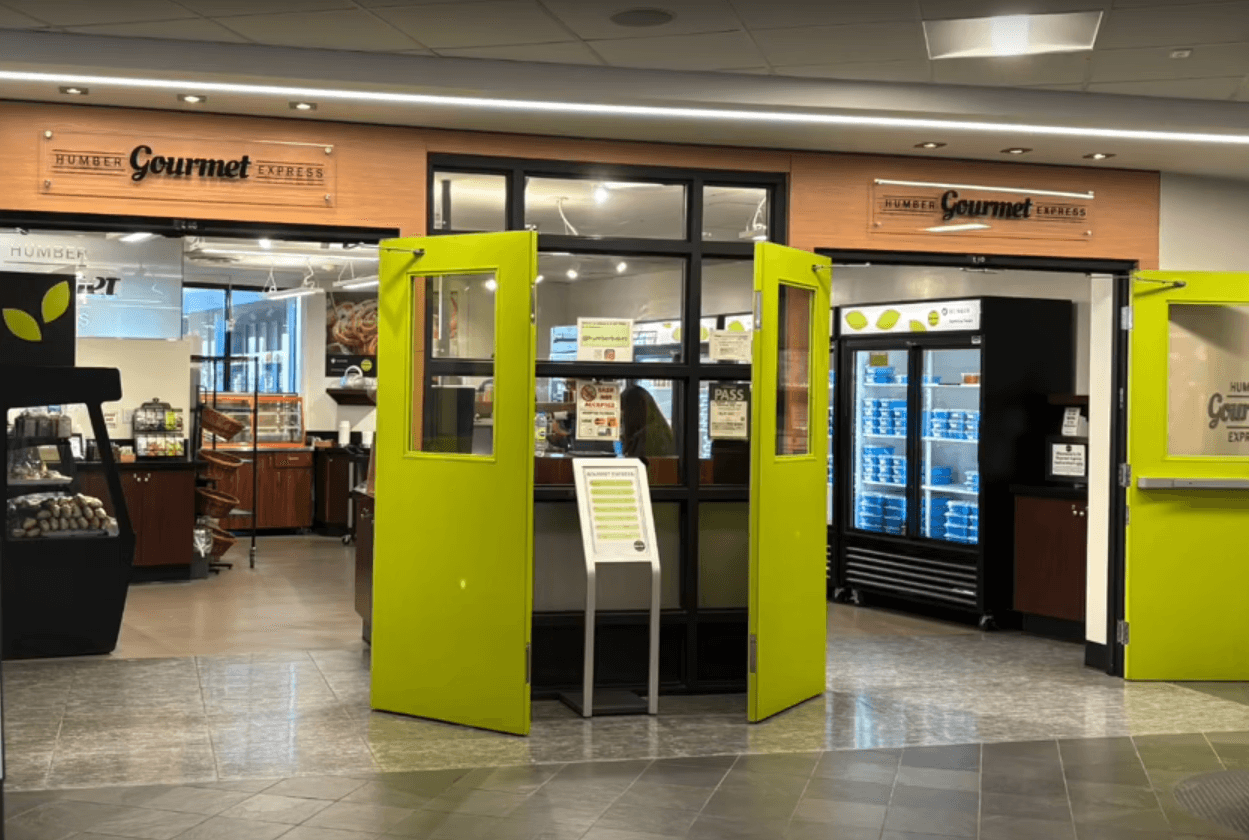
For this project, I worked in a team to analyze and redesign the service experience of Gourmet Express, a small food outlet at Humber Polytechnic's North Campus. Our goal was to identify operational challenges, improve the experience for customers, employees and the manager, and propose practical solutions using service design principles.
We applied the full service design process: site visits, interviews, stakeholder mapping, personas, journey maps, service blueprinting and prototyping. This was one of my most comprehensive projects, combining research, collaboration and creative problem-solving.
Challenge:
Manager availability was limited, making it hard to schedule interviews.
Short project timeline and quick deadlines required us to work efficiently.
Coordinating roles and responsibilities within the team while balancing multiple deliverables.
Ensuring consistency across all artifacts (personas, maps, blueprints) during multiple iterations.
Results:
Conducted on-site visits and interviews to uncover real pain points in operations and customer flow.
Designed personas, journey maps, stakeholder maps, and service blueprints (current and future state).
Developed a service prototype video demonstrating improved service flow.
Delivered a final report with actionable recommendations addressing both customer and backend challenges.
Process Overview
Process Overview
01.
Site Audit
Site Audit
Multiple visits during peak hours to observe real customer flow, staff interactions and bottlenecks.
02.
Interviews
Interviews
Manager and employee interviews revealing daily challenges: limited storage, time-consuming backstage tasks.
03.
Stakeholder Map
Stakeholder Map
Visual map of all actors - customers, staff, manager, finance department, program coordinators.
04.
Personas & Journeys
Personas & Journeys
Three personas (customer, employee, manager) each with full journey maps showing emotions and friction.
05.
Service Blueprint
Service Blueprint
Current and future state blueprints mapping frontstage and backstage actions against the customer journey.
06.
Prototype & Report
Prototype & Report
Service prototype video demonstrating improved flow. Final report with prioritized recommendations.
detailed PROCESS:
RESEARCH & DISCOVERY/Site audit:
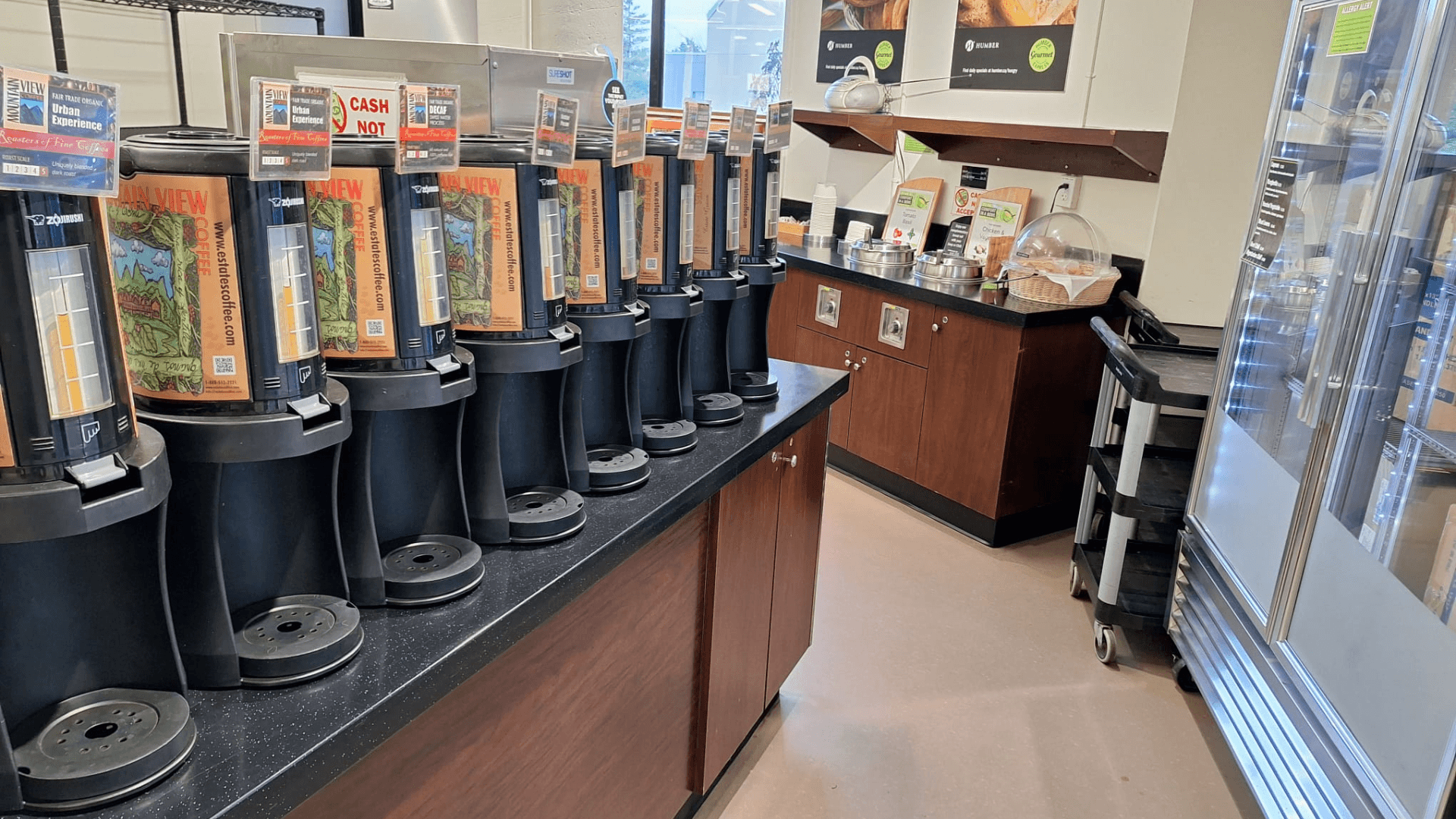
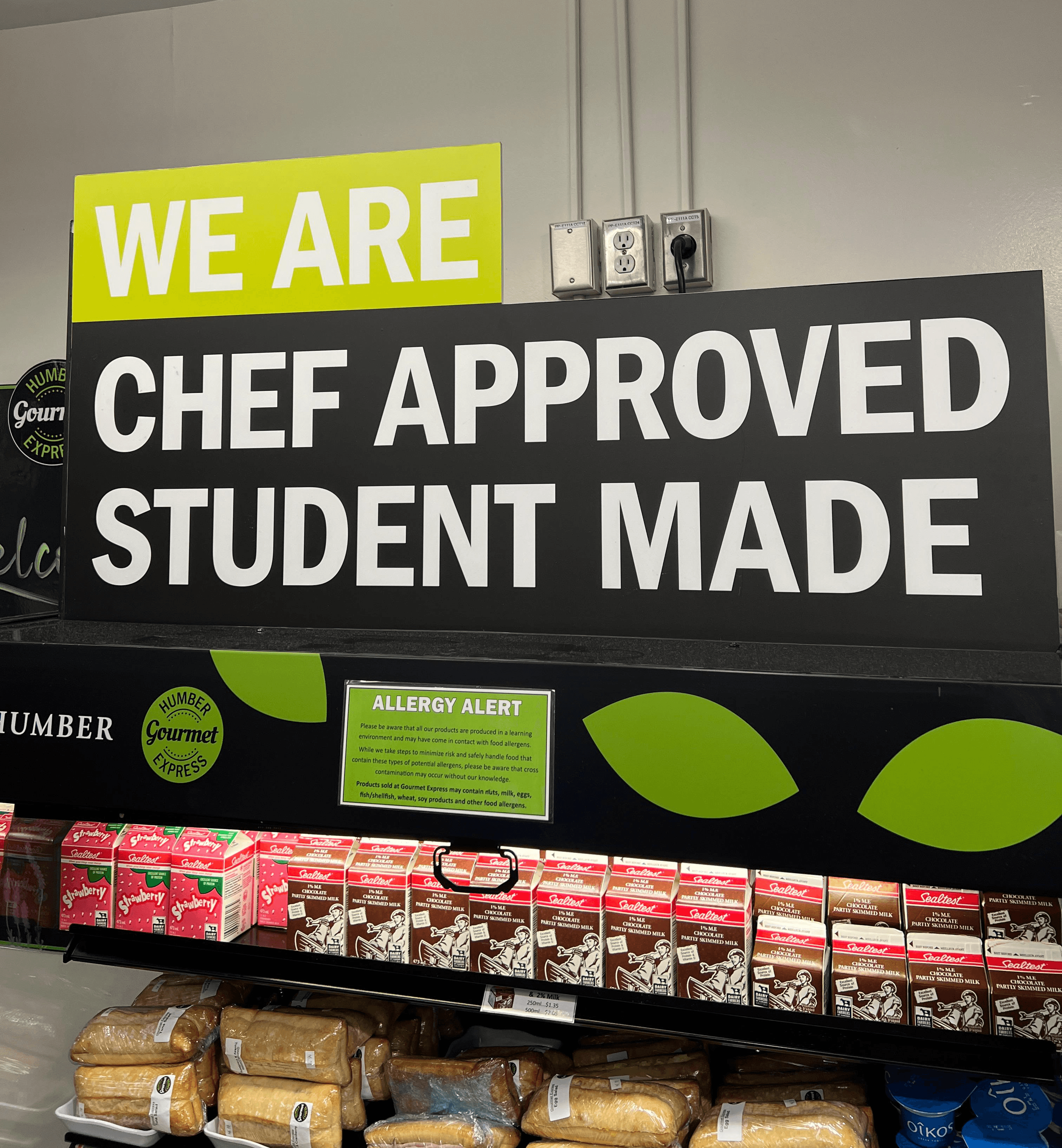
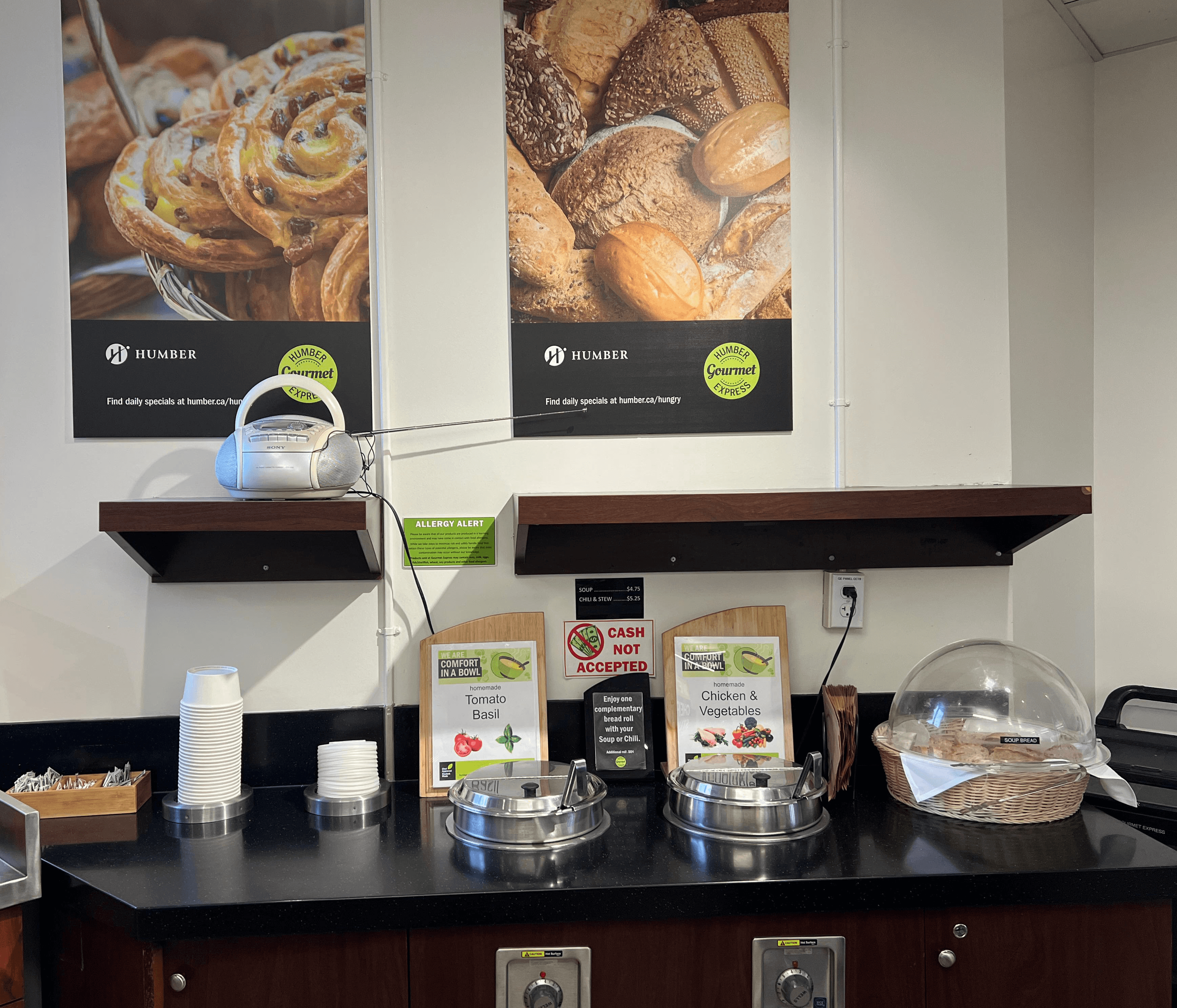
We began with multiple site visits during peak hours to observe the real customer flow, staff interactions, and operational bottlenecks.
With permission, we also captured photos to document the physical environment.
In addition, we conducted interviews with the manager and employees, which gave us an inside view of their daily challenges, such as limited storage and time-consuming backstage tasks.
Stakeholder Mapping:
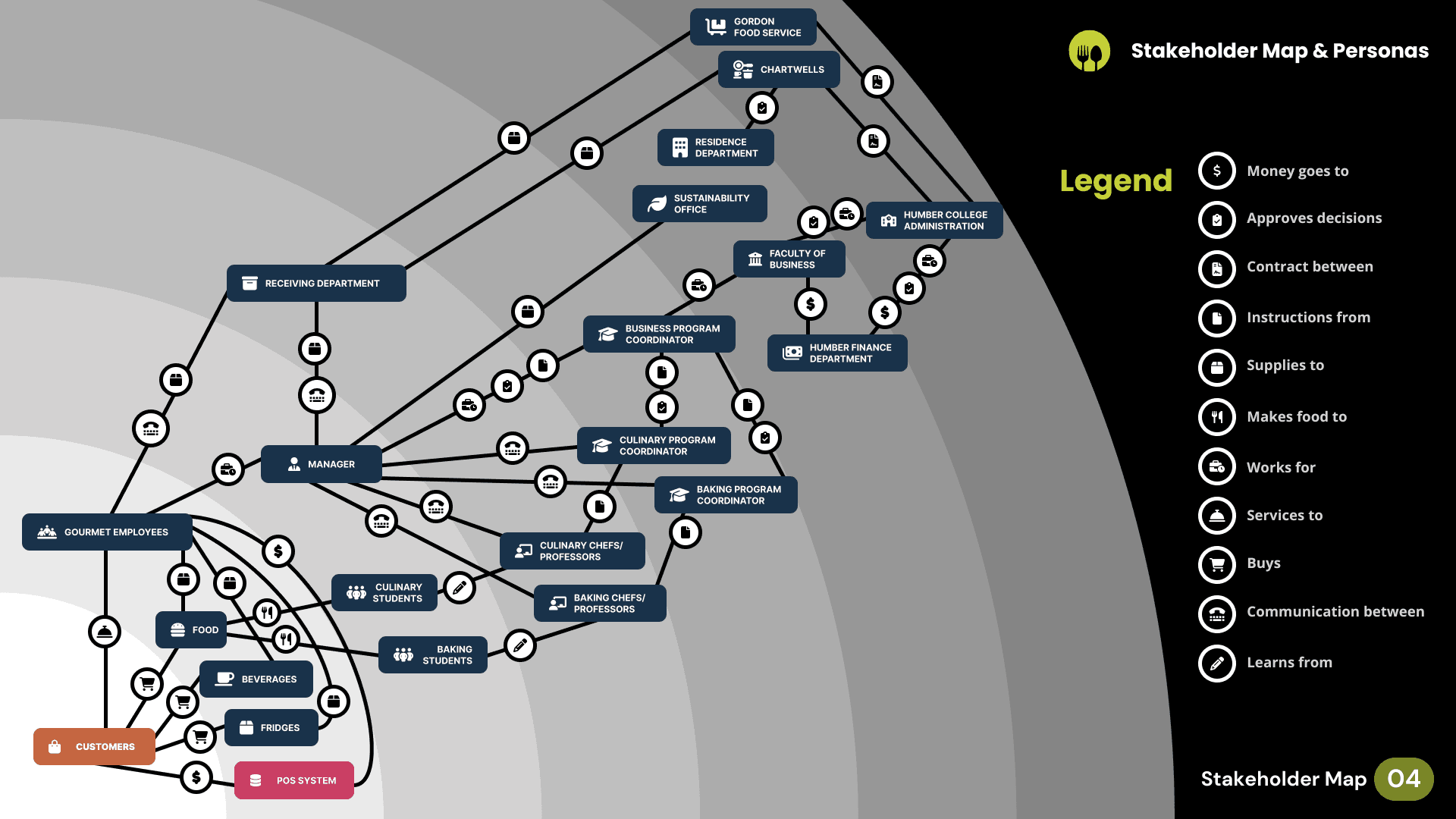
To understand the bigger picture, we built a stakeholder map showing the relationships between all actors involved - customers, employees, the manager, Humber’s finance department, and program coordinators. This visual helped us pinpoint where communication gaps and dependency issues were occurring.
Personas & Journey Maps:
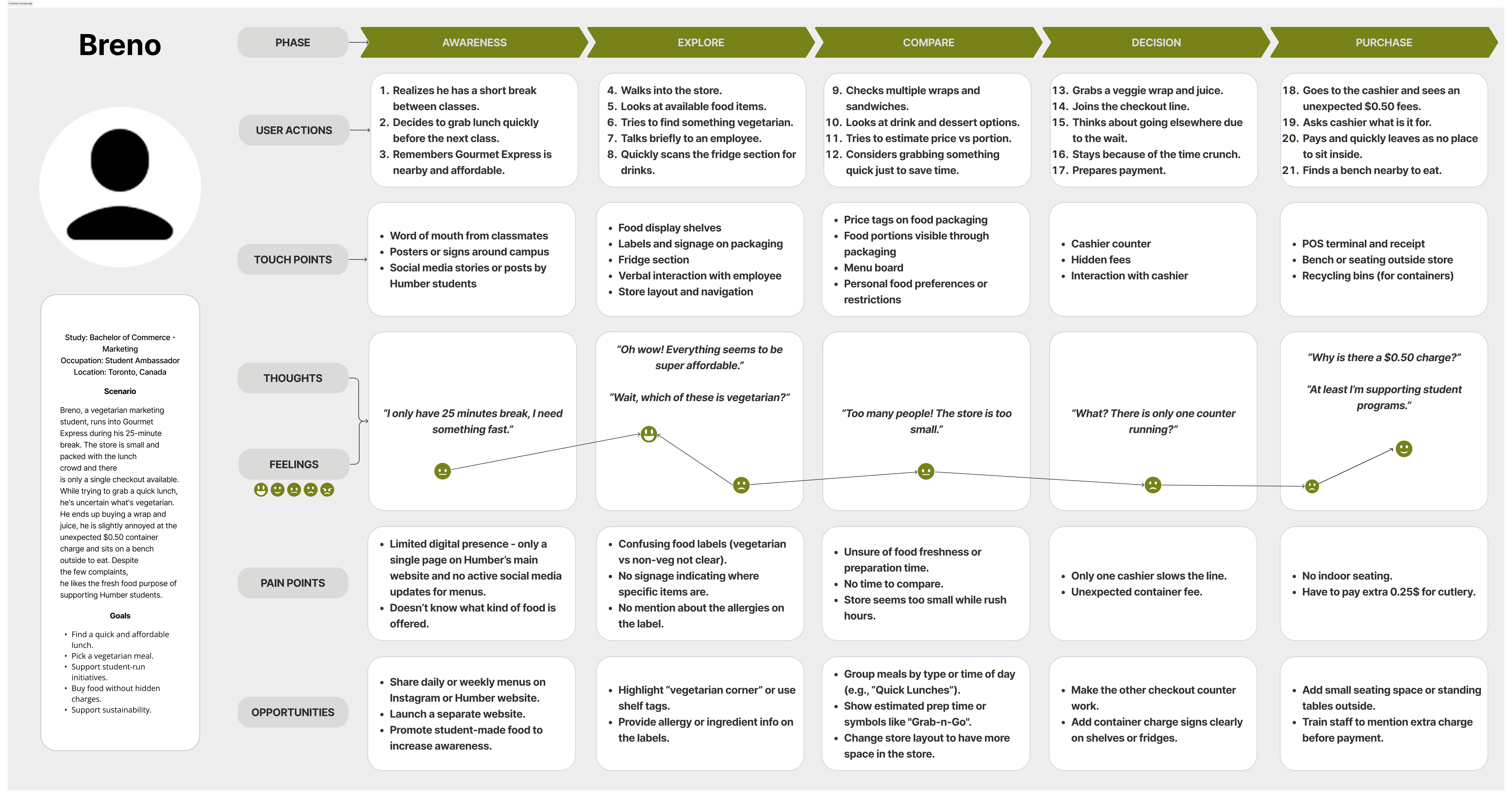
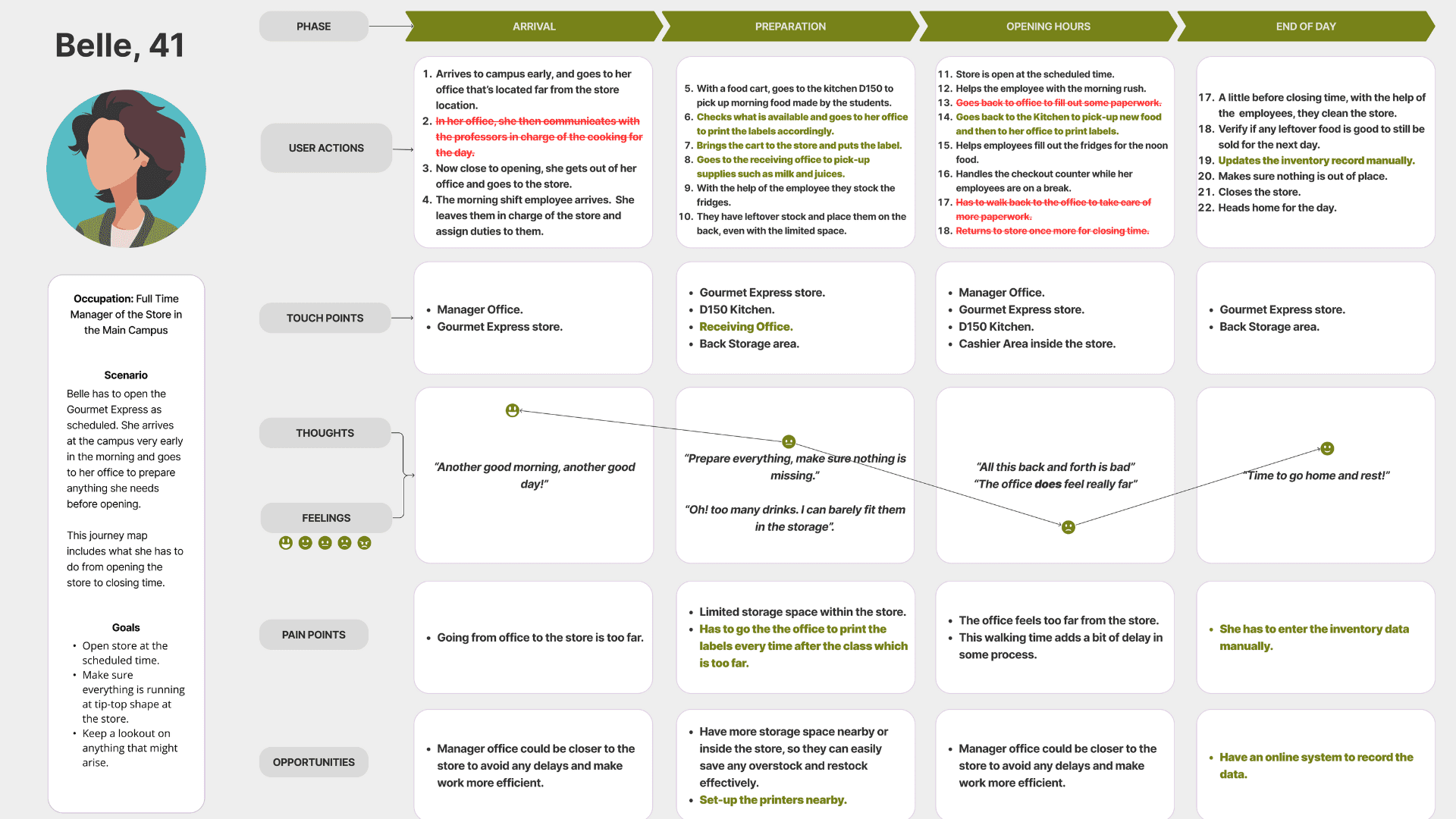
We created detailed personas representing the perspectives of a customer, employee, and manager. Each persona’s journey map captured their touchpoints, emotions, frustrations, and opportunities. For example, customers faced menu visibility issues, while employees struggled with backstage inefficiencies. These maps allowed us to empathize with stakeholders and prioritize improvements.
Service blueprint:
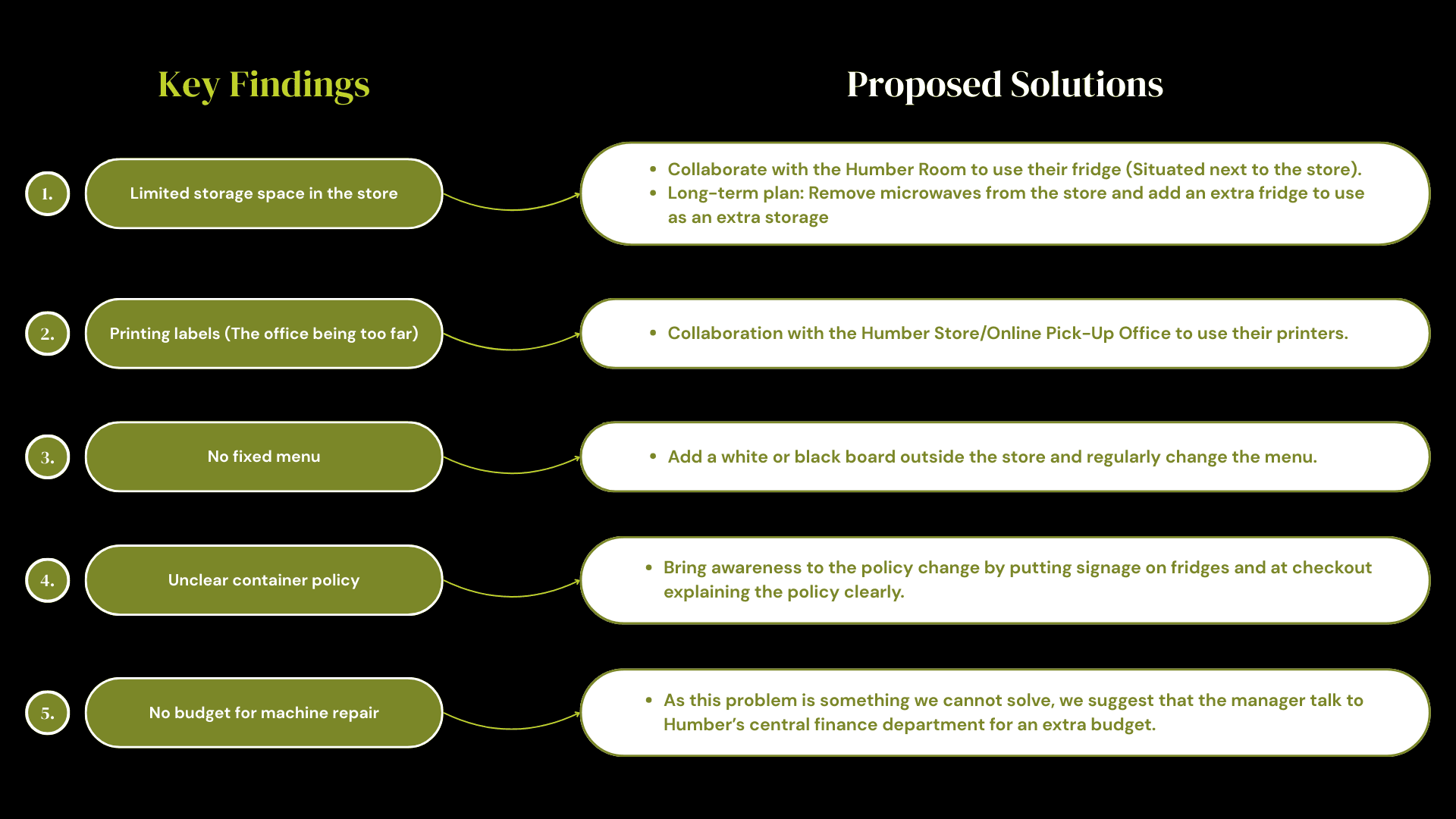
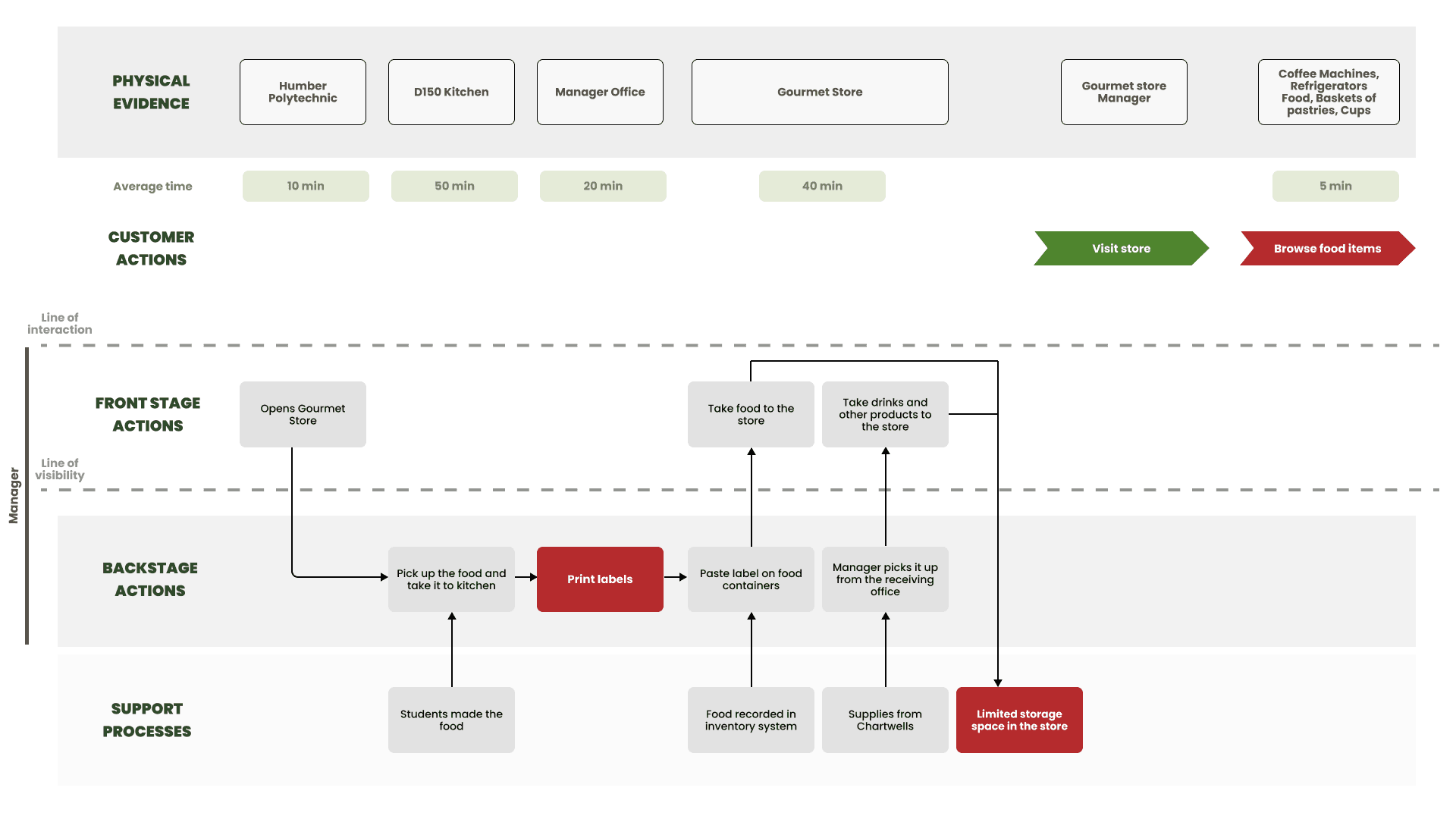
We developed a current state service blueprint, which visualized the end-to-end experience of Gourmet Express. This map revealed inefficiencies such as limited storage space, unclear reusable container policies, time wasted on offsite label printing and broken backstage workflows. Documenting these details gave us a clear picture of where staff and customer frustrations originated.
Service design prototype:
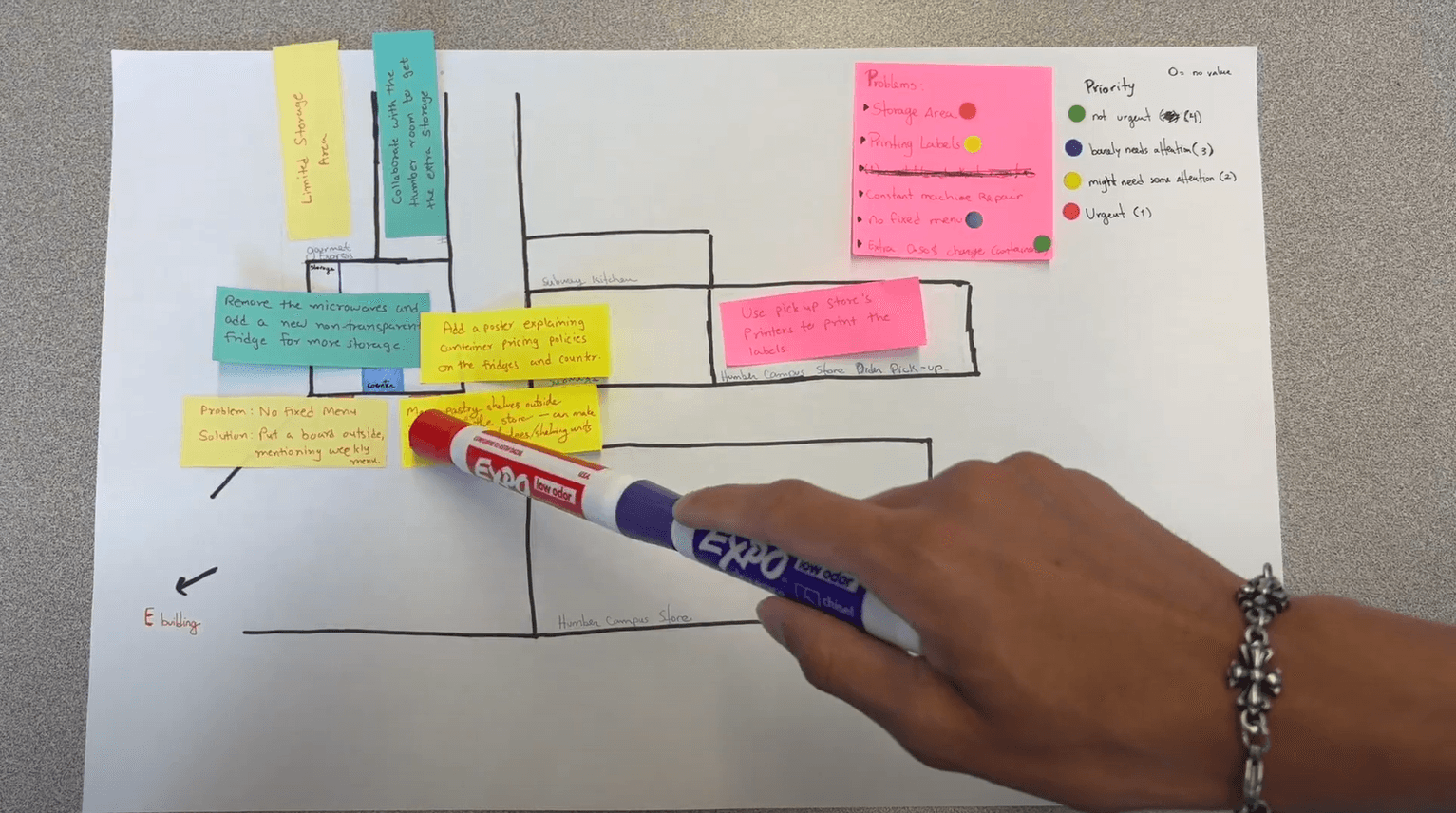
To bring our ideas to life, we created a short video prototype. It demonstrated:
Digital/physical menu boards for clear communication.
Improved labeling process with nearby printing.
Better options for more storage.
This prototype helped visualize how our solutions could realistically transform the Gourmet Express service experience.
Check it out in You Tube » https://youtu.be/MhJMs8fCv3A
iterations:
After gathering additional insights from follow-up visits and discussions, we refined our artifacts - personas, journey maps and especially the service blueprint. This led us to design a future state blueprint, which illustrated how our recommendations could resolve existing pain points.
By comparing the current and future state blueprints, we were able to clearly demonstrate the transformation from inefficiency to efficiency, showcasing how small, practical interventions could significantly improve the overall service experience.
final report & presentation:
The project concluded with a comprehensive final report and presentation that consolidated all our research, findings, and design artifacts. We showcased the journey from discovery to solution, emphasizing how our recommendations addressed the key issues identified at Gourmet Express.
Conclusion:
This project gave me end-to-end experience with service design methods - from research and stakeholder analysis to blueprinting and prototyping. It reinforced the importance of backstage processes in shaping the overall customer experience. By collaborating closely with stakeholders, we proposed simple yet impactful changes that could make Gourmet Express more efficient, customer-friendly, and sustainable.
What I’d Do Differently:
Conduct user validation with actual customers to test solutions.
Explore digital ordering options for faster service during peak hours.
Work on budget feasibility analysis to support financial decisions for repairs and equipment.
Service Design
Gourmet express service design
Redesigning Gourmet Express through Service Design: From insights to solutions - stakeholder mapping, journey mapping and service blueprinting to enhance customer and staff experience at Humber.
Year :
2025
Industry :
Food
Client :
Gourmet Express (Humber)
Project Duration :
14 weeks
Introduction:
For this project, I worked in a team to analyze and redesign the service experience of Gourmet Express, a small food outlet at Humber Polytechnic's North Campus. Our goal was to identify operational challenges, improve the experience for customers, employees and the manager, and propose practical solutions using service design principles.
We applied the full service design process: site visits, interviews, stakeholder mapping, personas, journey maps, service blueprinting and prototyping. This was one of my most comprehensive projects, combining research, collaboration and creative problem-solving.
Challenge:
Manager availability was limited, making it hard to schedule interviews.
Short project timeline and quick deadlines required us to work efficiently.
Coordinating roles and responsibilities within the team while balancing multiple deliverables.
Ensuring consistency across all artifacts (personas, maps, blueprints) during multiple iterations.
Results:
Conducted on-site visits and interviews to uncover real pain points in operations and customer flow.
Designed personas, journey maps, stakeholder maps, and service blueprints (current and future state).
Developed a service prototype video demonstrating improved service flow.
Delivered a final report with actionable recommendations addressing both customer and backend challenges.
Process Overview
Process Overview
01.
Site Audit
Site Audit
Multiple visits during peak hours to observe real customer flow, staff interactions and bottlenecks.
02.
Interviews
Interviews
Manager and employee interviews revealing daily challenges: limited storage, time-consuming backstage tasks.
03.
Stakeholder Map
Stakeholder Map
Visual map of all actors - customers, staff, manager, finance department, program coordinators.
04.
Personas & Journeys
Personas & Journeys
Three personas (customer, employee, manager) each with full journey maps showing emotions and friction.
05.
Service Blueprint
Service Blueprint
Current and future state blueprints mapping frontstage and backstage actions against the customer journey.
06.
Prototype & Report
Prototype & Report
Service prototype video demonstrating improved flow. Final report with prioritized recommendations.
detailed PROCESS:
RESEARCH & DISCOVERY/Site audit:
We began with multiple site visits during peak hours to observe the real customer flow, staff interactions, and operational bottlenecks.
With permission, we also captured photos to document the physical environment.
In addition, we conducted interviews with the manager and employees, which gave us an inside view of their daily challenges, such as limited storage and time-consuming backstage tasks.
Stakeholder Mapping:
To understand the bigger picture, we built a stakeholder map showing the relationships between all actors involved - customers, employees, the manager, Humber’s finance department, and program coordinators. This visual helped us pinpoint where communication gaps and dependency issues were occurring.
Personas & Journey Maps:
We created detailed personas representing the perspectives of a customer, employee, and manager. Each persona’s journey map captured their touchpoints, emotions, frustrations, and opportunities. For example, customers faced menu visibility issues, while employees struggled with backstage inefficiencies. These maps allowed us to empathize with stakeholders and prioritize improvements.
Service blueprint:
We developed a current state service blueprint, which visualized the end-to-end experience of Gourmet Express. This map revealed inefficiencies such as limited storage space, unclear reusable container policies, time wasted on offsite label printing and broken backstage workflows. Documenting these details gave us a clear picture of where staff and customer frustrations originated.
Service design prototype:
To bring our ideas to life, we created a short video prototype. It demonstrated:
Digital/physical menu boards for clear communication.
Improved labeling process with nearby printing.
Better options for more storage.
This prototype helped visualize how our solutions could realistically transform the Gourmet Express service experience.
Check it out in You Tube » https://youtu.be/MhJMs8fCv3A
iterations:
After gathering additional insights from follow-up visits and discussions, we refined our artifacts - personas, journey maps and especially the service blueprint. This led us to design a future state blueprint, which illustrated how our recommendations could resolve existing pain points.
By comparing the current and future state blueprints, we were able to clearly demonstrate the transformation from inefficiency to efficiency, showcasing how small, practical interventions could significantly improve the overall service experience.
final report & presentation:
The project concluded with a comprehensive final report and presentation that consolidated all our research, findings, and design artifacts. We showcased the journey from discovery to solution, emphasizing how our recommendations addressed the key issues identified at Gourmet Express.
Conclusion:
This project gave me end-to-end experience with service design methods - from research and stakeholder analysis to blueprinting and prototyping. It reinforced the importance of backstage processes in shaping the overall customer experience. By collaborating closely with stakeholders, we proposed simple yet impactful changes that could make Gourmet Express more efficient, customer-friendly, and sustainable.
What I’d Do Differently:
Conduct user validation with actual customers to test solutions.
Explore digital ordering options for faster service during peak hours.
Work on budget feasibility analysis to support financial decisions for repairs and equipment.
Service Design
Gourmet express service design
Redesigning Gourmet Express through Service Design: From insights to solutions - stakeholder mapping, journey mapping and service blueprinting to enhance customer and staff experience at Humber.
Year :
2025
Industry :
Food
Client :
Gourmet Express (Humber)
Project Duration :
14 weeks
Introduction:
For this project, I worked in a team to analyze and redesign the service experience of Gourmet Express, a small food outlet at Humber Polytechnic's North Campus. Our goal was to identify operational challenges, improve the experience for customers, employees and the manager, and propose practical solutions using service design principles.
We applied the full service design process: site visits, interviews, stakeholder mapping, personas, journey maps, service blueprinting and prototyping. This was one of my most comprehensive projects, combining research, collaboration and creative problem-solving.
Challenge:
Manager availability was limited, making it hard to schedule interviews.
Short project timeline and quick deadlines required us to work efficiently.
Coordinating roles and responsibilities within the team while balancing multiple deliverables.
Ensuring consistency across all artifacts (personas, maps, blueprints) during multiple iterations.
Results:
Conducted on-site visits and interviews to uncover real pain points in operations and customer flow.
Designed personas, journey maps, stakeholder maps, and service blueprints (current and future state).
Developed a service prototype video demonstrating improved service flow.
Delivered a final report with actionable recommendations addressing both customer and backend challenges.
Process Overview
Process Overview
01.
Site Audit
Site Audit
Multiple visits during peak hours to observe real customer flow, staff interactions and bottlenecks.
02.
Interviews
Interviews
Manager and employee interviews revealing daily challenges: limited storage, time-consuming backstage tasks.
03.
Stakeholder Map
Stakeholder Map
Visual map of all actors - customers, staff, manager, finance department, program coordinators.
04.
Personas & Journeys
Personas & Journeys
Three personas (customer, employee, manager) each with full journey maps showing emotions and friction.
05.
Service Blueprint
Service Blueprint
Current and future state blueprints mapping frontstage and backstage actions against the customer journey.
06.
Prototype & Report
Prototype & Report
Service prototype video demonstrating improved flow. Final report with prioritized recommendations.
detailed PROCESS:
RESEARCH & DISCOVERY/Site audit:
We began with multiple site visits during peak hours to observe the real customer flow, staff interactions, and operational bottlenecks.
With permission, we also captured photos to document the physical environment.
In addition, we conducted interviews with the manager and employees, which gave us an inside view of their daily challenges, such as limited storage and time-consuming backstage tasks.
Stakeholder Mapping:
To understand the bigger picture, we built a stakeholder map showing the relationships between all actors involved - customers, employees, the manager, Humber’s finance department, and program coordinators. This visual helped us pinpoint where communication gaps and dependency issues were occurring.
Personas & Journey Maps:
We created detailed personas representing the perspectives of a customer, employee, and manager. Each persona’s journey map captured their touchpoints, emotions, frustrations, and opportunities. For example, customers faced menu visibility issues, while employees struggled with backstage inefficiencies. These maps allowed us to empathize with stakeholders and prioritize improvements.
Service blueprint:
We developed a current state service blueprint, which visualized the end-to-end experience of Gourmet Express. This map revealed inefficiencies such as limited storage space, unclear reusable container policies, time wasted on offsite label printing and broken backstage workflows. Documenting these details gave us a clear picture of where staff and customer frustrations originated.
Service design prototype:
To bring our ideas to life, we created a short video prototype. It demonstrated:
Digital/physical menu boards for clear communication.
Improved labeling process with nearby printing.
Better options for more storage.
This prototype helped visualize how our solutions could realistically transform the Gourmet Express service experience.
Check it out in You Tube » https://youtu.be/MhJMs8fCv3A
iterations:
After gathering additional insights from follow-up visits and discussions, we refined our artifacts - personas, journey maps and especially the service blueprint. This led us to design a future state blueprint, which illustrated how our recommendations could resolve existing pain points.
By comparing the current and future state blueprints, we were able to clearly demonstrate the transformation from inefficiency to efficiency, showcasing how small, practical interventions could significantly improve the overall service experience.
final report & presentation:
The project concluded with a comprehensive final report and presentation that consolidated all our research, findings, and design artifacts. We showcased the journey from discovery to solution, emphasizing how our recommendations addressed the key issues identified at Gourmet Express.
Conclusion:
This project gave me end-to-end experience with service design methods - from research and stakeholder analysis to blueprinting and prototyping. It reinforced the importance of backstage processes in shaping the overall customer experience. By collaborating closely with stakeholders, we proposed simple yet impactful changes that could make Gourmet Express more efficient, customer-friendly, and sustainable.
What I’d Do Differently:
Conduct user validation with actual customers to test solutions.
Explore digital ordering options for faster service during peak hours.
Work on budget feasibility analysis to support financial decisions for repairs and equipment.